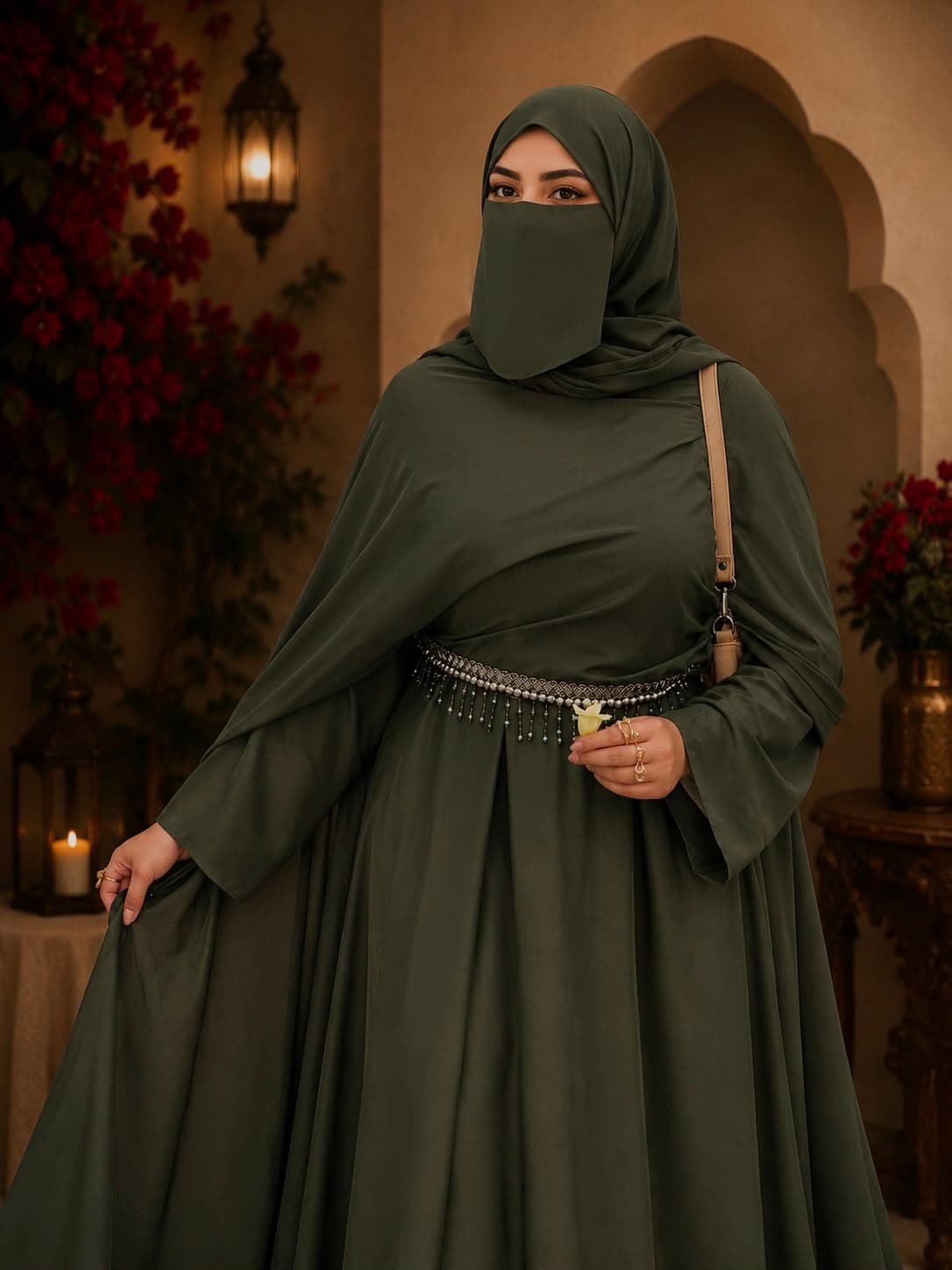
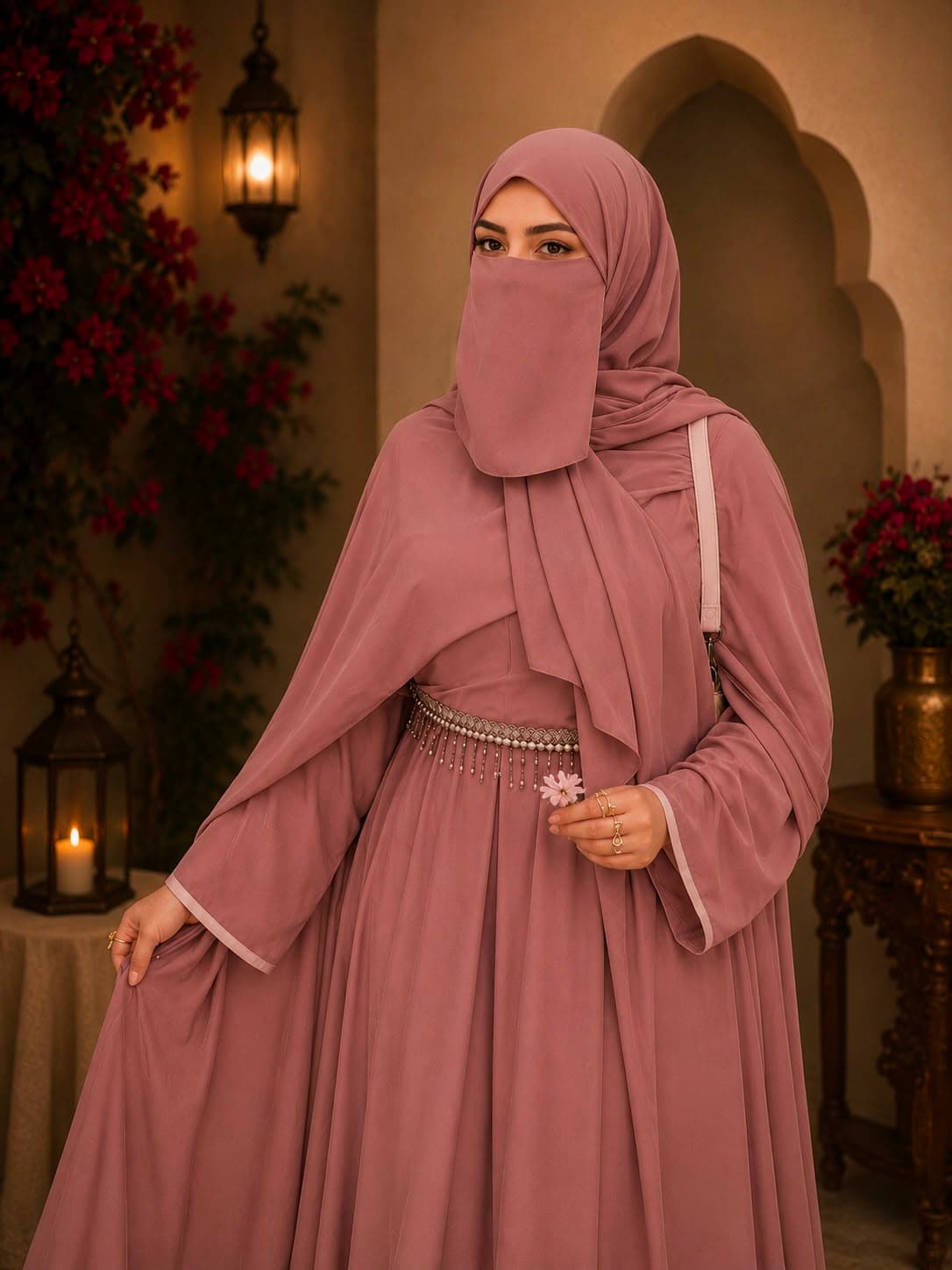
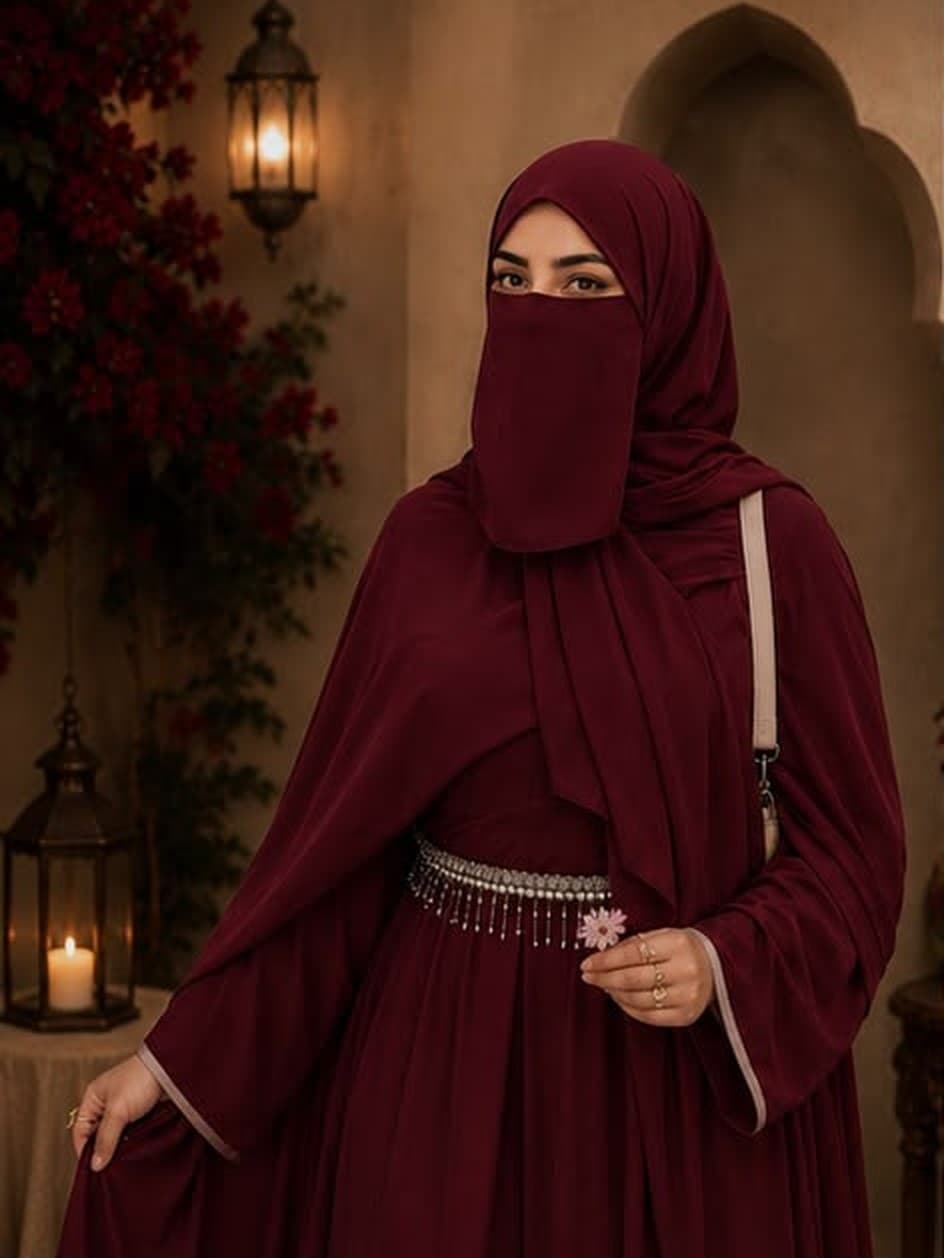
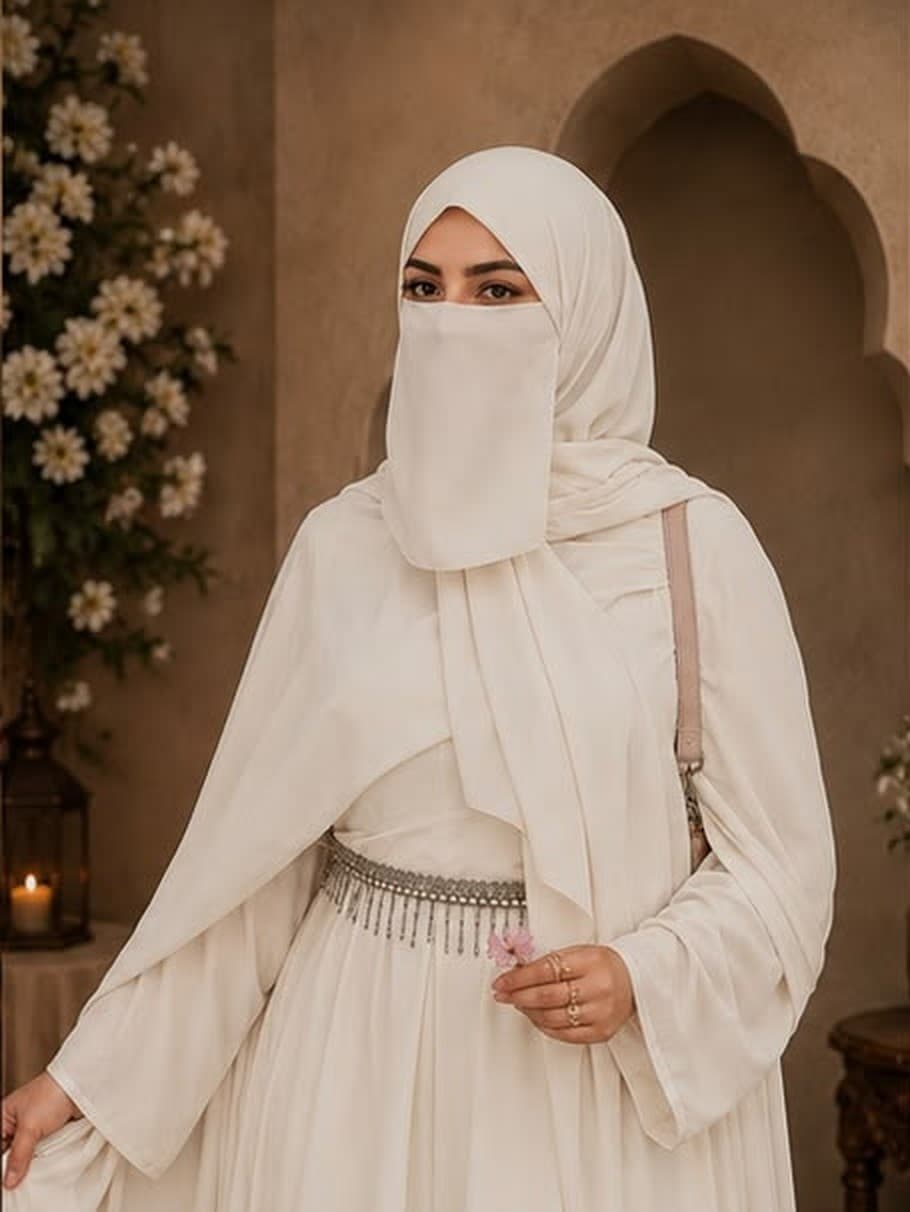
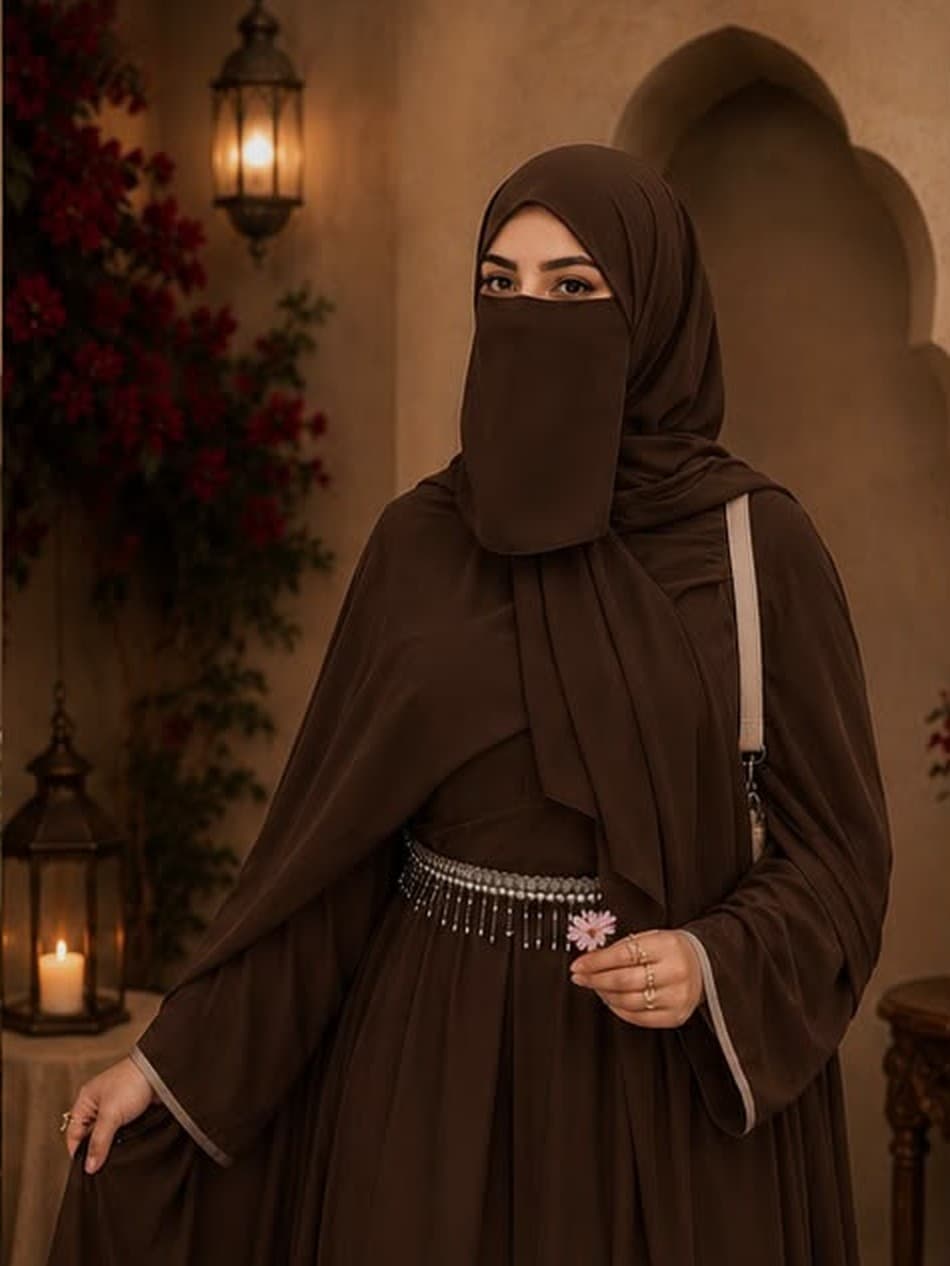
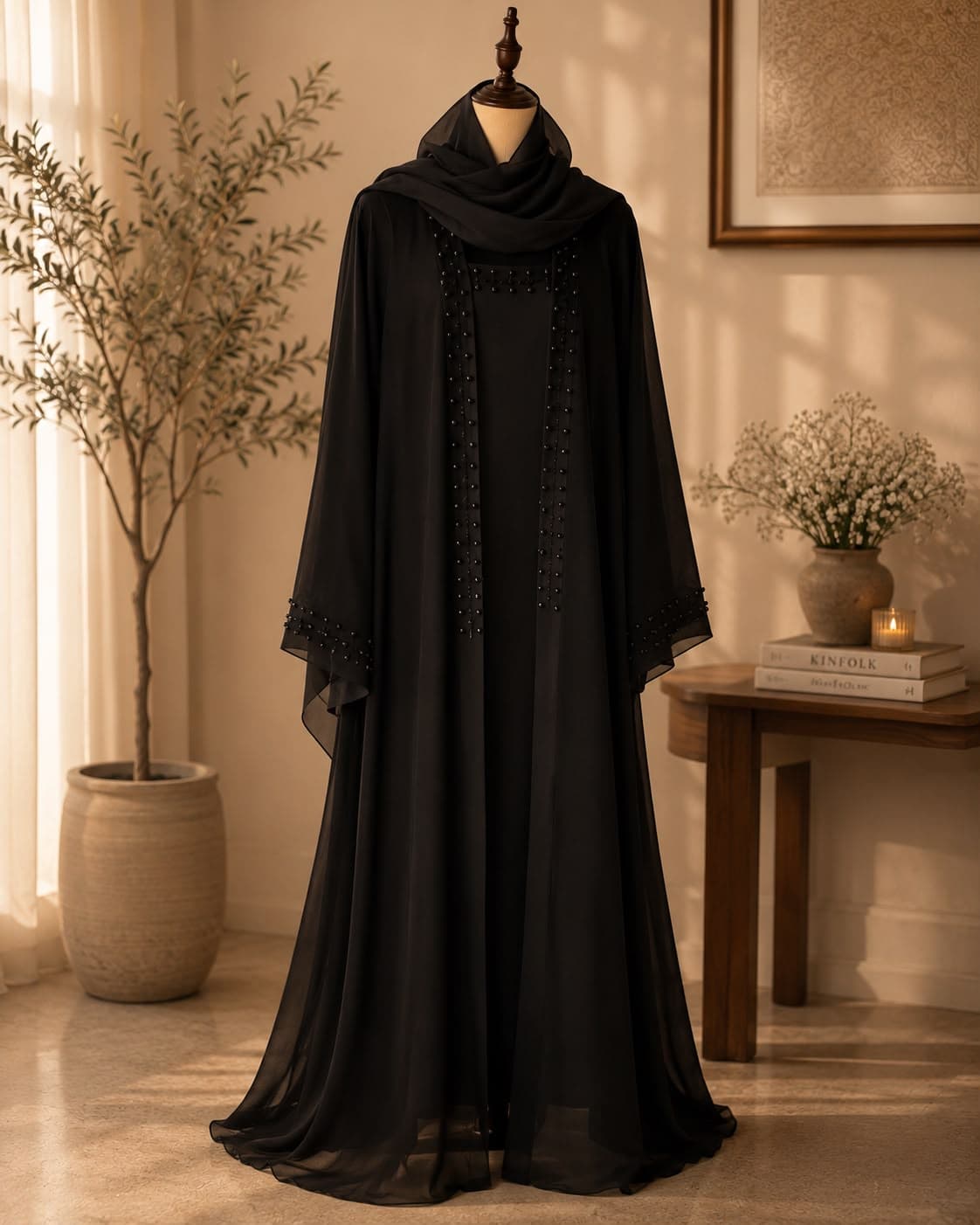
Zee & Zaa makes luxury abayas at a flat Rs. 6,800 in sizes S to XL, delivered across Pakistan with free Cash on Delivery. A luxury abaya is not about a logo: it is fabric weight, drape, lining, genuine handwork and clean finishing. We cut our Aura shades in luxury flowy crepe and our Signature Noir Grace in premium Nida with hand-set beadwork, all stitched by two sisters in Multan.
“Luxury” on a product page is easy to type and hard to prove. These are the five things that genuinely separate a luxury abaya from an ordinary one, and none of them is a brand name. Once you know them, you can judge any piece, ours included.
1
Fabric weight
A luxury abaya has weight to it. A heavier crepe or a dense premium Nida feels substantial in the hand and hangs from the shoulders instead of clinging to them. The very light, papery fabric on a lesser piece creases the moment you sit down and reads thin in photographs. You can feel the difference before you can see it.
2
Drape and flow
Weight and cut together decide how a piece moves. A good abaya falls in long, unbroken lines and, on a flared cut, swings and settles rather than sticking out stiffly. That flowing drape is what makes an abaya look expensive walking across a room, and it is the first thing that a poorly cut or over-light piece gets wrong.
3
Lining and opacity
Pale and mid shades are only luxurious if they are opaque, and that means lined. An unlined ivory or rose that goes see-through in daylight is a corner cut you only discover after buying. A lined piece costs more fabric and more stitching, and it is one of the clearest tells that a maker did not rush.
4
Handwork
Machine embroidery is even and repeats perfectly. Genuine handwork does not, and that is its value: hand-set beadwork and tilla and resham threadwork catch light at slightly different angles because each element is placed by a person. That small unevenness is only visible up close, and it is the difference a screen cannot fully show.
5
Finishing
Luxury lives at the edges. Straight seams, an even hem, clean cuffs, a neatly set neckline and no loose threads are what separate a finished piece from a nearly finished one. Turn any abaya inside out and the inside tells you how much care went into the outside.
Our two fabrics
Luxury crepe and premium Nida
Luxury flowy crepe
The crepe we cut the Aura shades from has a fine, matte, slightly textured surface that breaks light so the colour never looks flat. It is weighted to fall and swing rather than cling, which is what gives the umbrella flare its flow, and it resists creasing through a long day of wear. Pale shades like Ivory and Rose are fully lined in it, so they stay completely opaque.
Premium Nida
Nida is a soft, matte, densely woven fabric that holds a clean line and reads as a deep, even black. Our Signature Noir Grace is built on a full Nida inner abaya with a sheer chiffon over-layer floating on top, so the black has two depths to it. It is the base that carries the hand-set beadwork without pulling or sagging.
Not sure which suits your weather and occasion? The Nida versus crepe guide compares them in full.
Tilla and resham
The handwork you pay for
The part of a luxury abaya that a screen struggles to show is the handwork. Tilla is the traditional metallic threadwork of this region, and resham is fine silk-thread embroidery; both are worked by hand, and both catch light unevenly because a person, not a machine, placed each stitch. On Noir Grace, hand-set beads run the front panel and flare across the cuffs, each one set individually so no two catch the light at quite the same angle. That small irregularity is the whole point, and it is only fully visible in person.
Because this is slow, human work, it is also where a resold, mass-made piece cannot compete however low its price. The full story of how the sisters work is on the craft page.
Shop luxury abayas
The luxury collection
Every piece is a flat Rs. 6,800 in sizes S to XL, with the matching hijab and free Cash on Delivery across Pakistan. Tap any one for its real photos, the shade in two lights and the care note.
A luxury abaya comes down to five things: a heavier, better-draping fabric, the way it flows when you move, lining that keeps pale shades opaque, genuine handwork rather than only machine embroidery, and careful finishing at the seams, hem and cuffs. A high price without those is just a markup. At Zee & Zaa all five come at a flat Rs. 6,800.
What fabric is best for a luxury abaya?
+
The two fabrics that read as luxury for most of the year are a good-weight crepe, which flows and resists creasing, and premium Nida, which is soft, matte and holds a clean line. Zee & Zaa uses luxury flowy crepe for the Aura shades and premium Nida for the Signature Noir Grace. Both are named on every product page so you know exactly what you are getting.
What is a flowy abaya?
+
A flowy abaya is one cut and weighted to fall in long, moving lines rather than hanging flat or clinging. It usually means a fuller cut, sometimes an umbrella flare, in a fabric heavy enough to swing and settle. Our Aura silhouette is cut this way in luxury crepe, so it moves with you and holds its shape.
Why is your luxury abaya only Rs. 6,800?
+
Because we are the maker, not a reseller, and we do not add a 'luxury' markup on top of the cost. Two sisters cut and stitch every piece in Multan, we photograph our own garments, and we sell directly, so Rs. 6,800 buys the fabric, the handwork and the finishing without a middleman's margin. The price includes the matching hijab and free Cash on Delivery across Pakistan.
How do I keep a luxury abaya looking new?
+
Wash cold and gently, turn the piece inside out, and dry it in shade rather than long direct sun. Hand-set beadwork and the Nida Signature piece should be hand washed or dry cleaned, never machined. Each product page carries the care note for that specific shade, and there is a full washing guide in our guides.